
Application Development
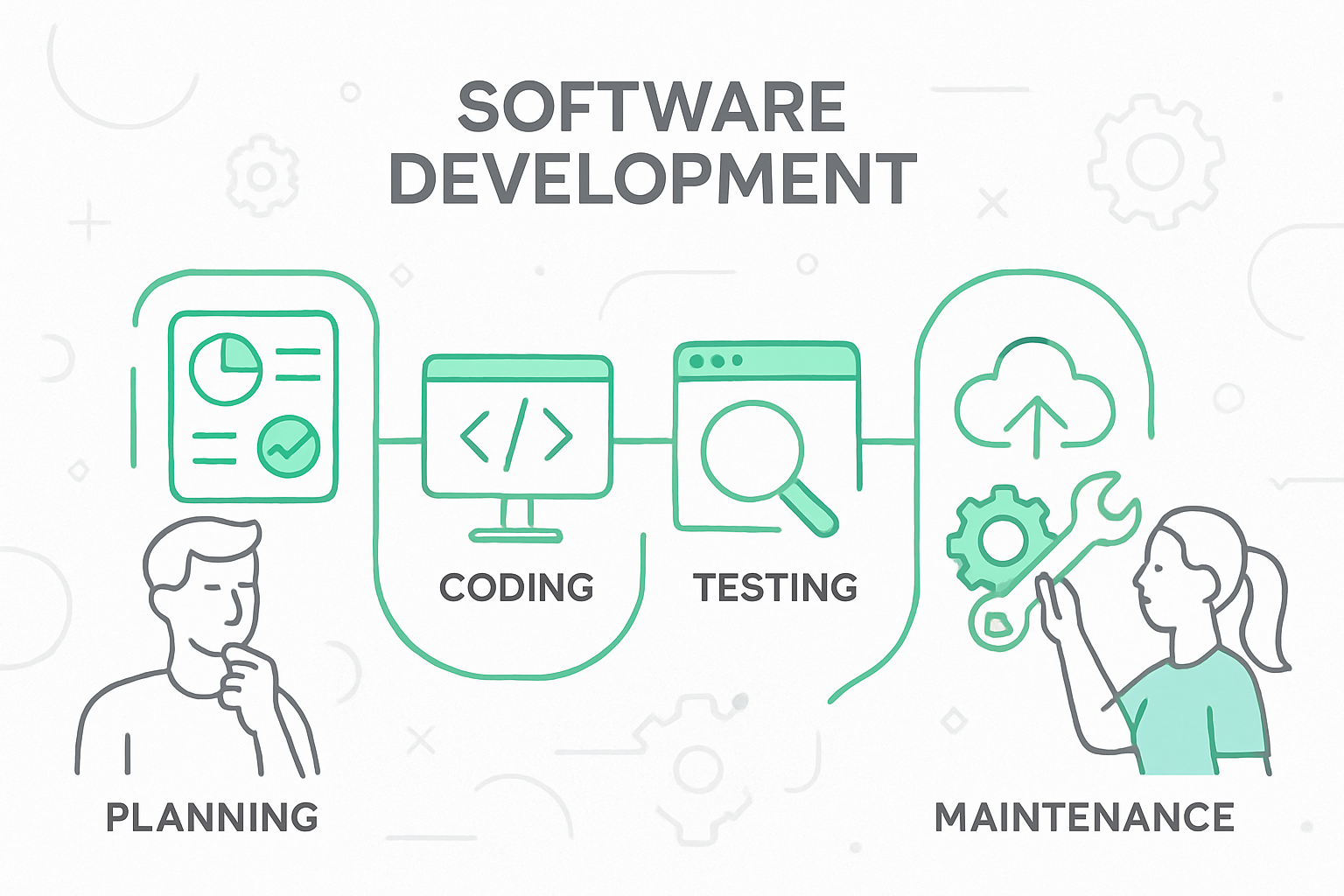
What We Will Do
- Requirement Analysis: Understand your business and website goals.
- Design & Layout: Create modern, responsive designs for all devices.
- Static Pages: Build pages using HTML, CSS, and JavaScript.
- SEO-Friendly: Optimize structure for search engines and fast loading.
- Contact Forms: Simple inquiry or email integration (optional).
- Hosting Support: Assistance with domain, hosting, and deployment.
- Maintenance: Optional updates, bug fixes, and improvements.
Why Choose Us?
- Affordable & Reliable Services
- Clean, Responsive, and Professional Design
- Fast Delivery with Quality Assurance
- Dedicated Support for Clients
Overview — What we deliver
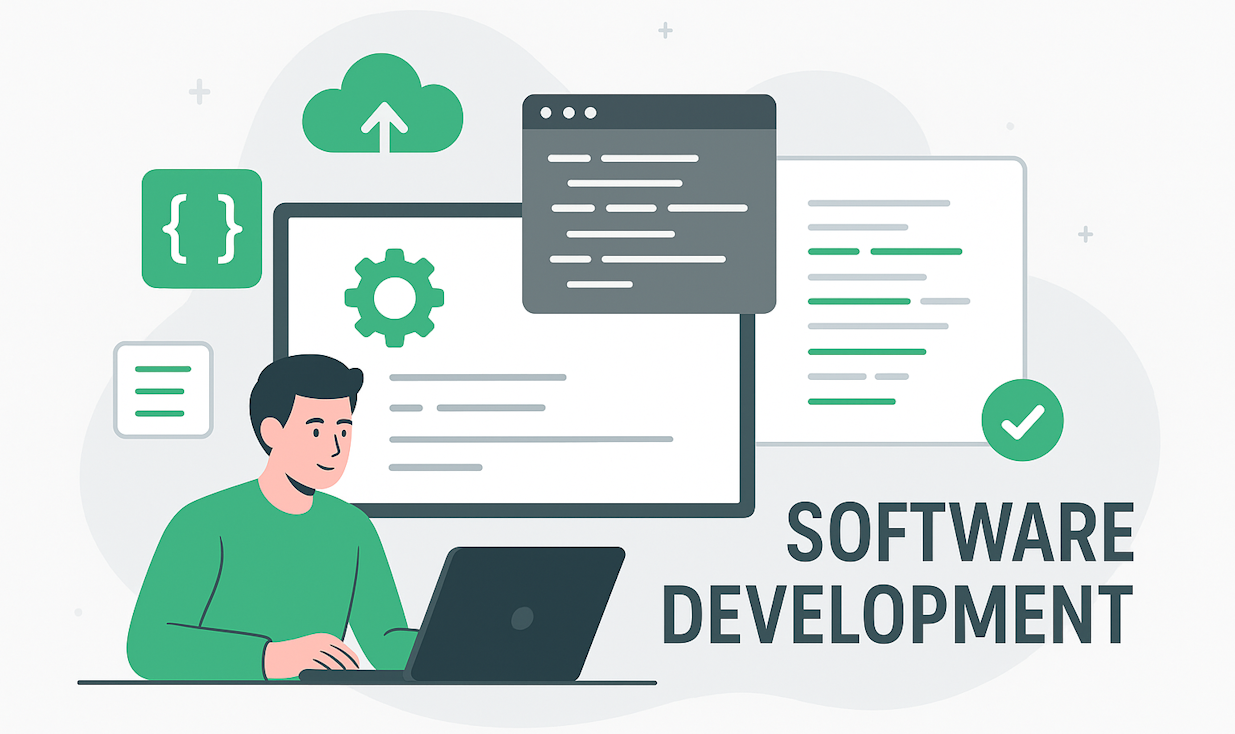
We help teams create production-ready web & mobile applications from idea → launch using an Agile approach. Below is a step-by-step process you can present to stakeholders, clients or on a product development landing page.
High-level phases
Discover
Research & idea
Plan
Backlog & roadmap
Build
Sprints & delivers
Ship
Release & monitor
Improve
Feedback & iterate
Detailed Agile process
Below is a typical flow used when building an application from scratch, broken into concrete deliverables and activities for each step.
1. Discovery (1–2 weeks)
- Stakeholder interviews & goals — define success metrics.
- Competitive analysis & user research.
- Initial product backlog: features, constraints, and assumptions.
2. Planning & Roadmap (1 week)
- Prioritize backlog into MVP scope.
- Create coarse roadmap: releases & milestones.
- Define acceptance criteria for top stories.
3. Sprint-based development (ongoing)
We recommend 1–2 week sprints. Each sprint runs this loop:
- Sprint Planning: pick stories, estimate, assign owners.
- Daily Standup: unblock, sync, risks.
- Development & Testing: coding, peer review, automated tests.
- Sprint Review: demo increment to stakeholders.
- Retrospective: improvements for next sprint.
4. Release & Monitoring
- Prepare release notes, run final smoke tests, and deploy to production.
- Set up monitoring (errors, performance, users) and alerting.
- Measure KPIs and collect user feedback for the next cycle.
5. Continuous improvement
- Turn feedback and analytics into backlog items.
- Plan experiments and A/B tests to validate improvements.
Typical roles
Product Owner
Defines priorities & voice of customer
Scrum Master / Coach
Removes impediments & improves flow
Development Team
Engineers, QA, Designers
Artifacts & templates

Sprint Board (Kanban)
To Do • In Progress • Done — shareable live board (Trello/Jira/Linear)
- Product backlog template (user story format: As a... I want... so that...)
- Definition of Done checklist (code review, tests, docs, demo)
- Release checklist (migrations, backups, monitoring)
How to present this on your website
Use the following sections on a product/agency page to explain your process to clients:
- Hero: Short pitch + CTA to "Book discovery".
- Process overview: The 5-phase flow (use our SVG or custom icons).
- Deliverables: What clients get each phase (documents, prototypes, working software).
- Timeline & pricing: Example timelines for MVP vs full product.
- Case studies: images, results, metrics, quotes.